 General Clumsy

Scenery
Grassland, forest, hill, marsh, water and ruined village: the map's terrain.
In the HQ, click the drafting table (Map editor). The editor menu opens: New, Load, Save and Back to HQ. Esc reopens it at any time.
The gamepad works too. The status line at the bottom shows the current brush and what the map still lacks.
The brush menu sorts the tools by category; its Erase entry returns a tile to bare grassland. A brush politely refuses a tile that doesn't suit it, and the status line says why.
Grassland, forest, hill, marsh, water and ruined village: the map's terrain.
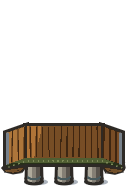
Bridge, road, trench, bunker, barbed wire and dragon's teeth, finished and neutral, only where their terrain allows: a bridge over a river, for instance.
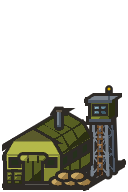
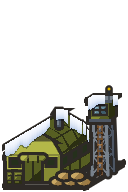
Every building in the game, finished, for the player or the enemy, on grassland only, outside the opposing zone: enough to give each side a base.

Each side's deployment zone, where its regiments arrive, and the victory points, on grassland or a hill.
At the top right, the season badge and the clock dial change the preview: left click for the next one, right click for the previous one. Snow, spring flood, night: see the map as it will be played. The preview is not saved with the map.


Each side's zone must hold at least one whole regiment, that is 8 tiles where its units fit: otherwise saving is refused.
A game is won by holding 4 victory points: place at least 4, otherwise only destroying the enemy decides victory.
At the HQ radio set, the Map setting offers your saved maps. The next New game is played on it, against the computer or a human; on a network, the host's map is used.
Each side lines up the regiments asked for by the Regiments setting, as many as its zone holds, as close as possible to the opposing zone.